Blog
-
Unit 2: Drawn Reflection
Orientation: Grounding through detail
Identify a moment where working at a microscopic scale sharpened or strengthened your understanding of the site. Noting the thickening layers of fly posters gave me the insight of time depth and mediation, which are connected in Brick Lane.
- What did isolating a 1m² section of the site allow you to notice that you might otherwise have missed? Working very closely with one lamppost which contained multiple competing messages in the form of stickers and graffiti.
- How did working within a defined boundary shape the way you looked? I looked at this vertical curved surface as a research space.
- Which method of documentation — drawing, rubbing, sound, film — felt most revealing and why? Drawing a well as the idea of the shrill vibration of a data centre enabled me to see the site via rhythms and frequencies.
Disorientation: When detail becomes abstract
Identify a moment where zooming in unsettled your understanding.
- Did magnification make the site feel unfamiliar or abstract?
- it made me wary of appropriating the golem as an image, as these are textures which do not resonate with my childhood and adulthood in South East London, but I kept seeing reminders of some connections, and read more about the Golem as a protector who becomes a threat, this resonates with emerging technology, which often seems to have a similar trajectory.
- Did surfaces begin to resemble something else? They resemble the body of a monster and a site of completion for space.
What does microscopic disorientation make possible for your developing practice?
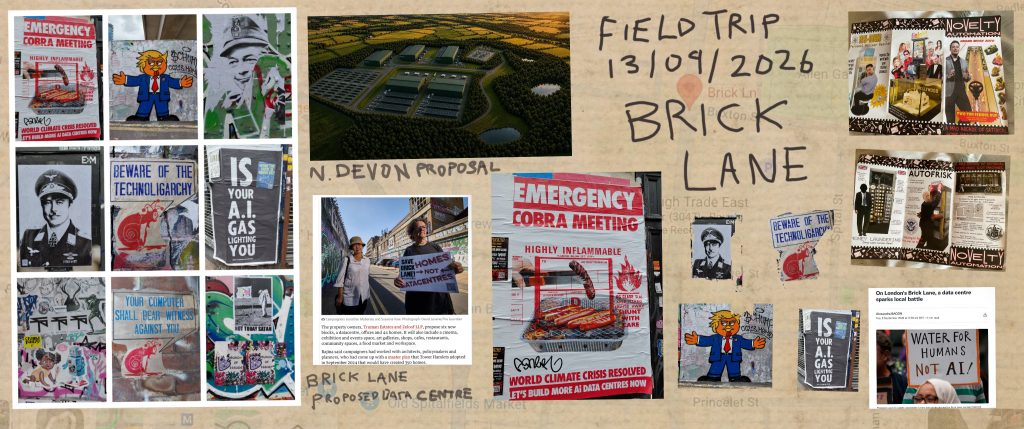
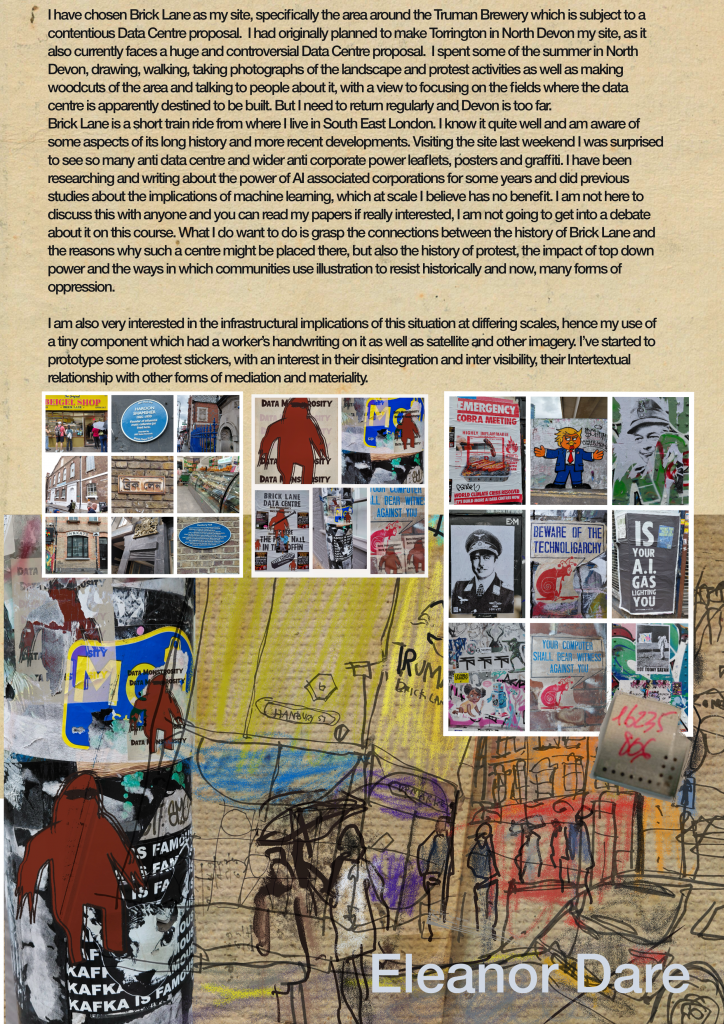
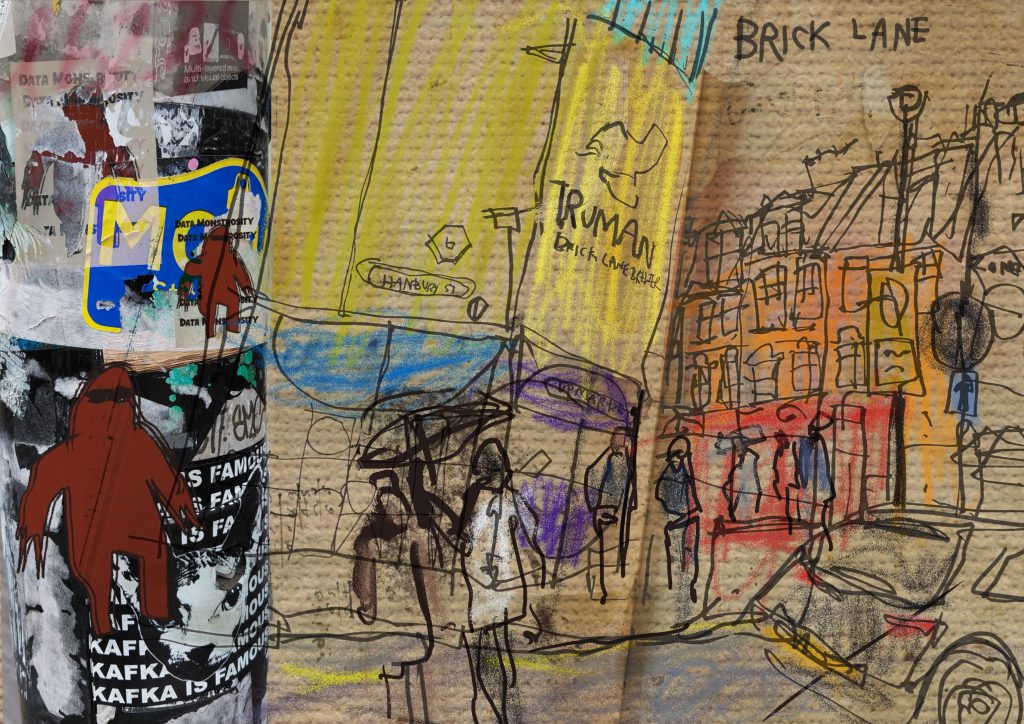
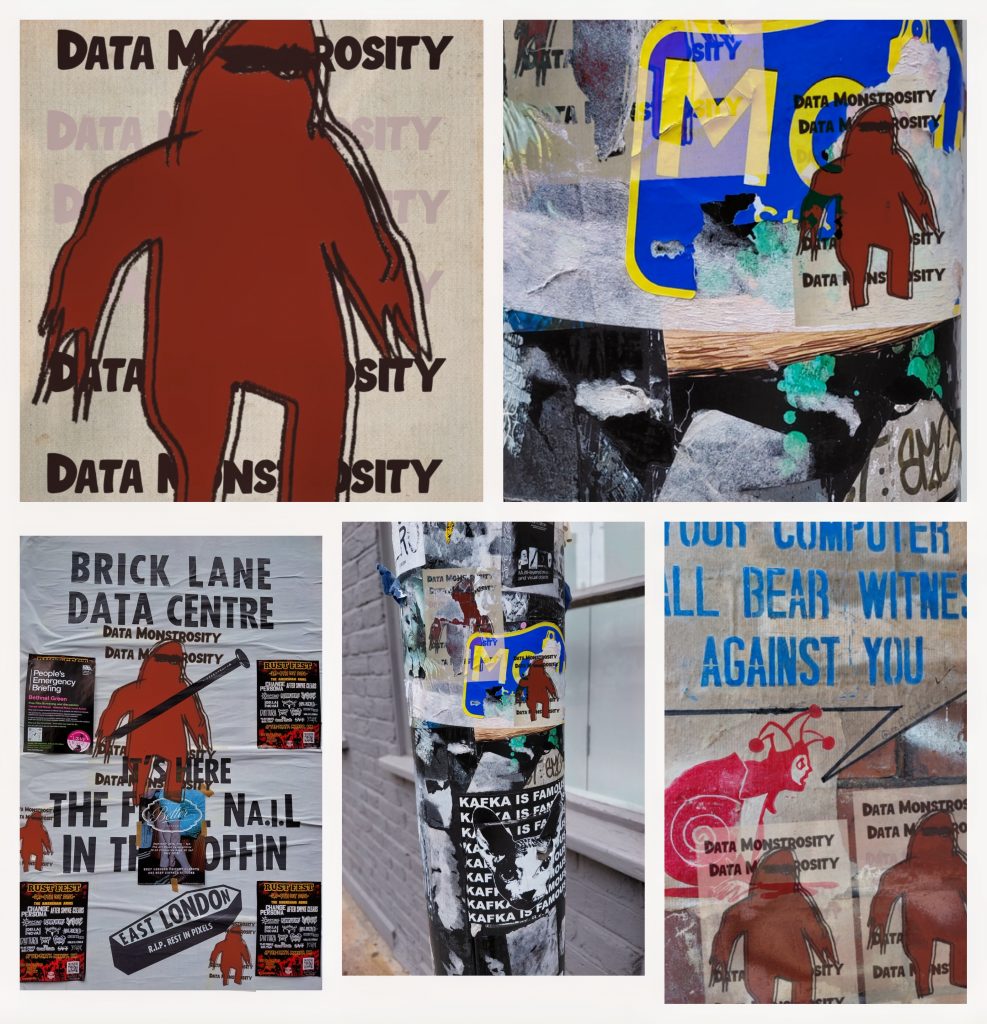
Diagram of ideas, themes and findings I drew a golem and rapidly prototyped an idea for a sticker protesting the data centre, superimposing it on the images of walls and lampposts which already had many stickers and notices made me reconsider the pressure to find such space, it seems like a form of Babel, a kind of chaos, not unlike the idea of a data centre.
-
scale 2
- How does scale affect the experience of the work?
- I begin to recoil against the idea of the ‘immersive’, projecting images at huge scale does not immerse me, I am with Brecht on immersion and wish to break the spell so we can grasp larger power structures and systems. Perhaps Metzger wishes this too
- Is the installation functioning more like an environment than an image?
- It makes me wonder what we can mean by an environment? It creates something from scale but to say something is ‘immersive’ or an environment no longer carries much meaning for me.
- How does light behave as a material here? It serves in a similar way to the staining of slides for microscopy, an editorial filter, enabling and disabling certain forms of vision
- What emotions or physical sensations emerge while viewing it? Oh I am so awkward and no longer believe in the construct of emotion? what is such a thing? It seems like a by product of late capitalist crisis (see also Ruth Leys, the Rise of Affect, Genealogy and Critique, 2020), I do not know what it feels like to be confronted by these images at scale. I have spent so long in hospitals surrounded by ‘scientific’ images presented a bit like this they do not impact me other than as a form of signalling, again, perhaps Metzger is also exploring that form of interior design?
- Does the instability of the projections reflect wider social or political instability? The political economy of the body is unstable, I know and sense that in my own bones and marrow, I think it is the knowledge economy which subsides as we speak.
- How might this work relate to ideas of systems breaking down or mutating?
- Materials will always decay, even Nuclear materials. Our bodies mutate, especially under conditions of industrial toxicity. My cells have divided themselves against me and in a wider sense a corporate coloniality seeks to break down all systems and reconstitute them to their own ends.
- What happens when illustration or image-making becomes immersive and spatial rather than fixed on a page? We get wall-to-wall Van Gogh if very unlucky or Richard Long and James Turrell if well financed, or something I do not know about which is less entangled with wealth, song lines or mass trespass maybe?
I will continue to research some of these:
- Metzger’s concept of “Auto-Destructive Art”
- the relationship between art, protest, and anti-capitalist politics in the 1960s
- psychedelia and altered perception in visual culture
- environmental collapse and entropy in contemporary art
- installation art as a form of world-building or performative image-making.
Note to self: scale of action and impact occurs to me, what if the work was an attempt at climate impact ?
-
Unit 2: Powers of Ten™
This film gave me a weird recurring nightmare or fugue experience as a child in the 1960s. The minute I would close my eyes I’d feel myself floating into space, further and further from the Earth, by opening my eyes I could instantly return to my bed in Forest Hill.
At night I would often dare myself to float further and further away from the planet. Watching the film(s) again immediately evoked that game I had with myself, but also annoyance with the staging of science in an era of escalating Cold War tension, it formed a part of the theatre of Western supremacy, it makes me feel a bit sick now. Eyal Weizman points out how the satellite imagery we can freely access now, in the 2020s has a lower resolution than in previous decades. Now, a human head cannot be detected, this makes it easier to hide violence, and to occlude the presence of communities in landscapes described as ’empty quarters’, such as nomadic people, who seem to be persecuted everywhere.
What interests me is the degree to which these technologies and their mediation become part of our imaginaries, my entire childhood seemed to be engulfed by mediation, such as the PG Tip Tea Cards, most of my (limited) understanding of the world is formed from first retrieving them from a pack of dusty tea bags, sniffing the cards then reading the tiny texts or decoding the images.
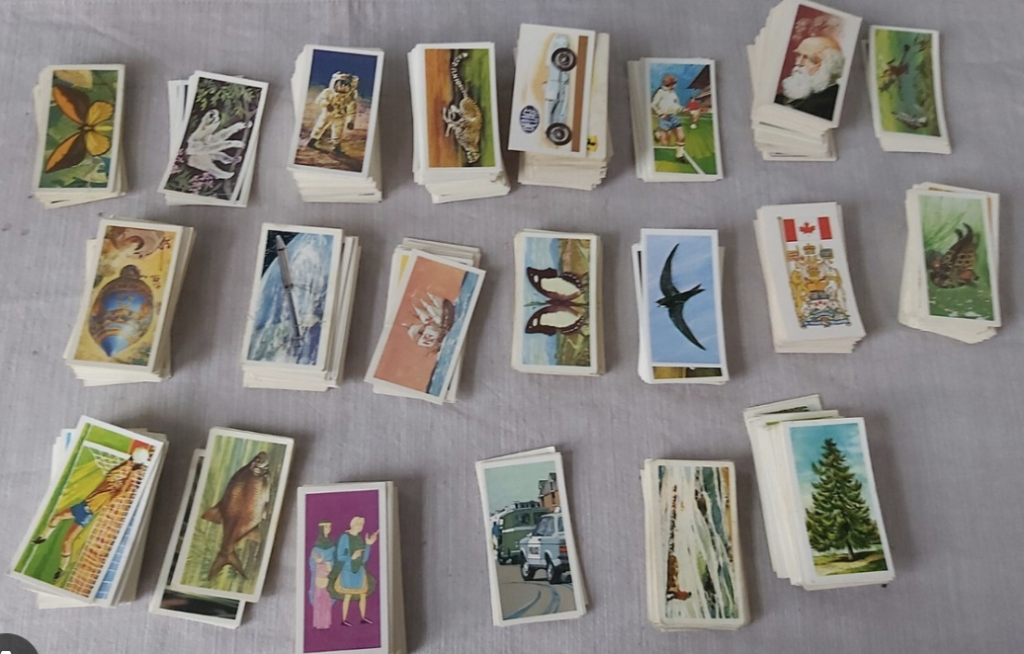
PG Tip tea bag cards, I found this image in eBay. They were often highly colonial, cliched and slanted towards Western narratives of technological superiority, ‘The Race Into Space’, if they existed today I can imagine they would probably feature ‘The AI Race’. The Eames’s film is conflated in my mind with the same ideologies.
-
Unit 2: scale
Unit 2 Scale
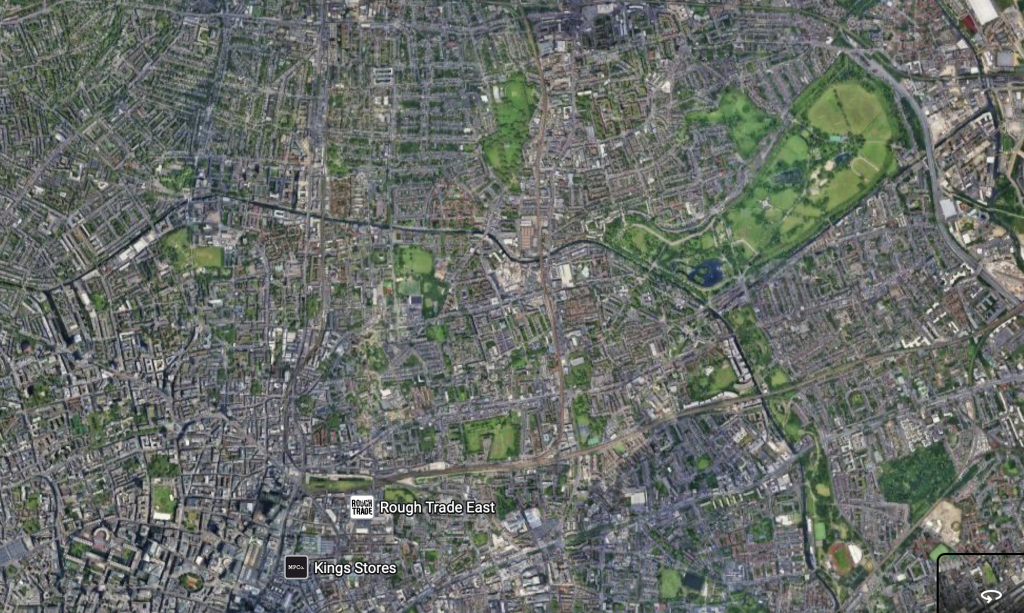
Google Earth, Brick Lane, East London - What does it mean to frame something and what gets left out when you do? We can’t see all at once, that’s a delusion of omnipotence, a God Trick as Donna Haraway would put it, given my theme of AI Data Centres, scale is very resonant, scale of infrastructure but also the scale of delusional omniscience, ‘AI’ represents an eviscerated and very limited form of knowledge, reducible to probability, not all knowledge, it is not all knowing but corporatised reduction.
- How might the same site look entirely different depending on the scale through which you approach it?
- Mapping and satellite imagery shows the scale of infrastructure and the networks it always connects to, but also the scale of human movement, globally. Eyal Weizman, 2002 and others warn of the limits of deploying satellite imagery without ground-truthing it with situated knowledge.
- Which of the 3 scales (microscopic, human or networked) feels most instinctive to you right now and why?
- I’m drawn to all as a form of triangulation, I can’t approach these themes in the isolation of one particular scale. But there is also the scale(s) of Habitus and Field (Bourdieu, 1993), how individuals and social structures, rituals and practices are entangled.
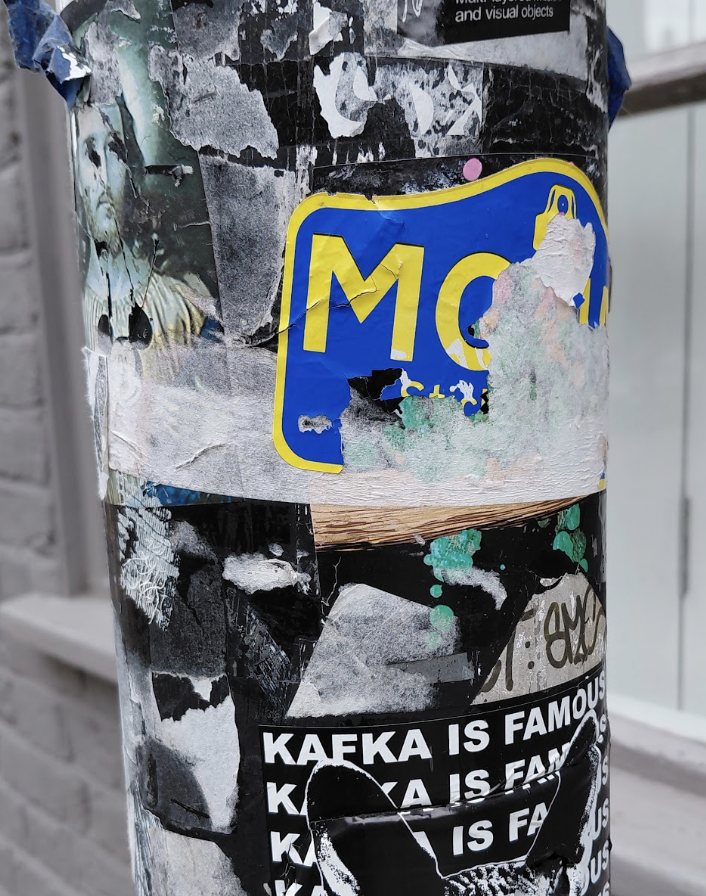
Brick Lane, East London, Lamp post, Dare, 2026 Bourdieu, Pierre (1993). The Field of Cultural Production. Cambridge, UK: Polity Press.
Weizman, Eyal (2002) Introduction to the Politics of Verticality. opendemocracy.net
-
Reflect: Audio response
The Golem has no brain but it knows how to move, it’s animated without knowing why, it moves like an animal but it’s only raw material . I imagine now it’s shrill hum, it’s cables and servers vibrating in Brick Lane, children at night begging a parent to leave a light on as they hear the golem resonance, a loudening horror. That’s as far as I go with an idea so far, lamp post stickers for the Brick Lane million gigawatt golem. How do I begin to make this into images? A Literal golem, a shady metaphor?
The disorientation is still there: what even is illustration ? I’ve heard it said with some sneering, we aren’t here to illustrate theory, we aren’t making truth claims, we are here for the process. So I will continue to process this site and its harsh frequencies.
- What specifically worked well? Going to the site
- Was it a fieldwork observation? Yes, walking and drawing and collecting images, sounds, ideas, smells, tastes, histories, tensions
- A research discovery? That Brick Lane is media saturated
- A shift in how you thought about the site? I think of it as media
- Did something contradict your assumptions about the site? I thought more reflectively upon the contrivances of the site, its staging as edgy and diverse amidst the £6 coffee
- Did your chosen method fail or produce unexpected results?
- I did not think I would get to the Golem and Frankenstein
- Did research introduce a perspective that challenged your initial position? I had not imagined the direction it would take and when I saw certain old postcards I was reminded of mystery and ghosts
-
disorientation
in Brecht’s play, Life of Galileo, 1938, the telescope is a threat to power, showing that the sun does not revolve around the most powerful. I’m disoriented by The Unclean World, 1903, as we cannot rely on what seems to be a scientific vision, instead we realise it is a staging with toys, a satire on technologically mediated vision. The joke surprises me and at the same time, it’s a reminder to distrust what we see, to distrust the ideology of empiricism. In some ways it’s a validation of illustration, which makes its truth claims (if at all) with an assumed subjectivity, even in the case of court images and wildlife guides, war reportage and portraits, we know there is an author who is situated.
-
digging deeper, field trip to Brick Lane, 13/09/2026
data centres
extraction
power
infrastructure
memory
Materials
Street stickers
protest
graffiti
banners
landscapes
cityscapes
zines
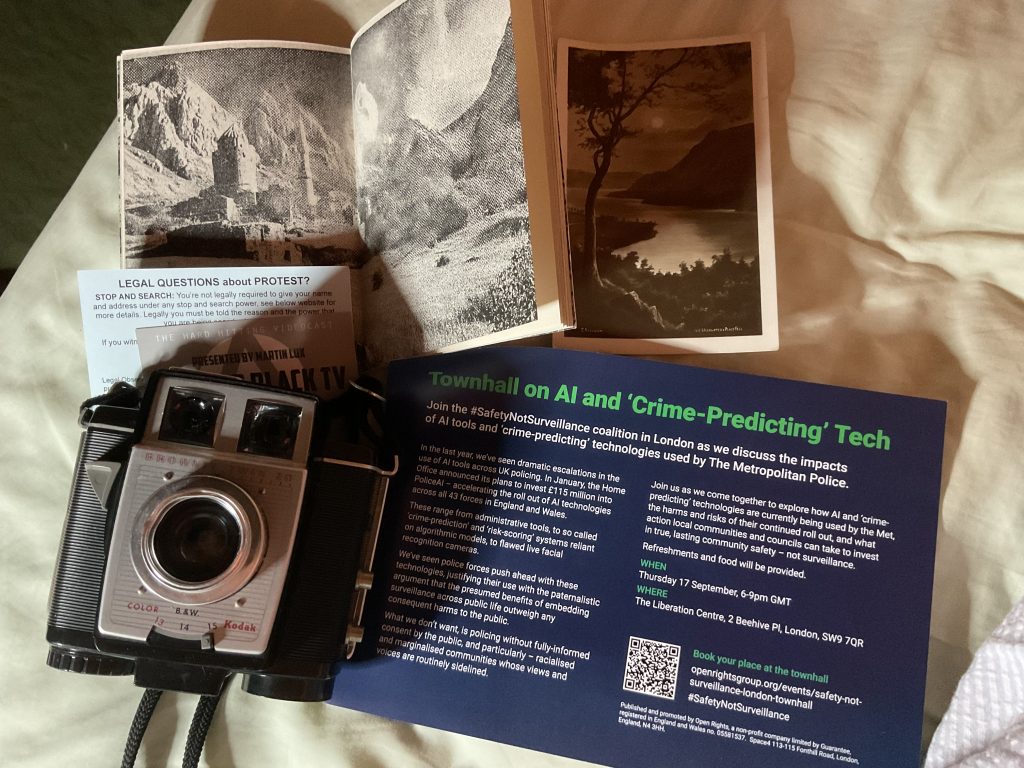
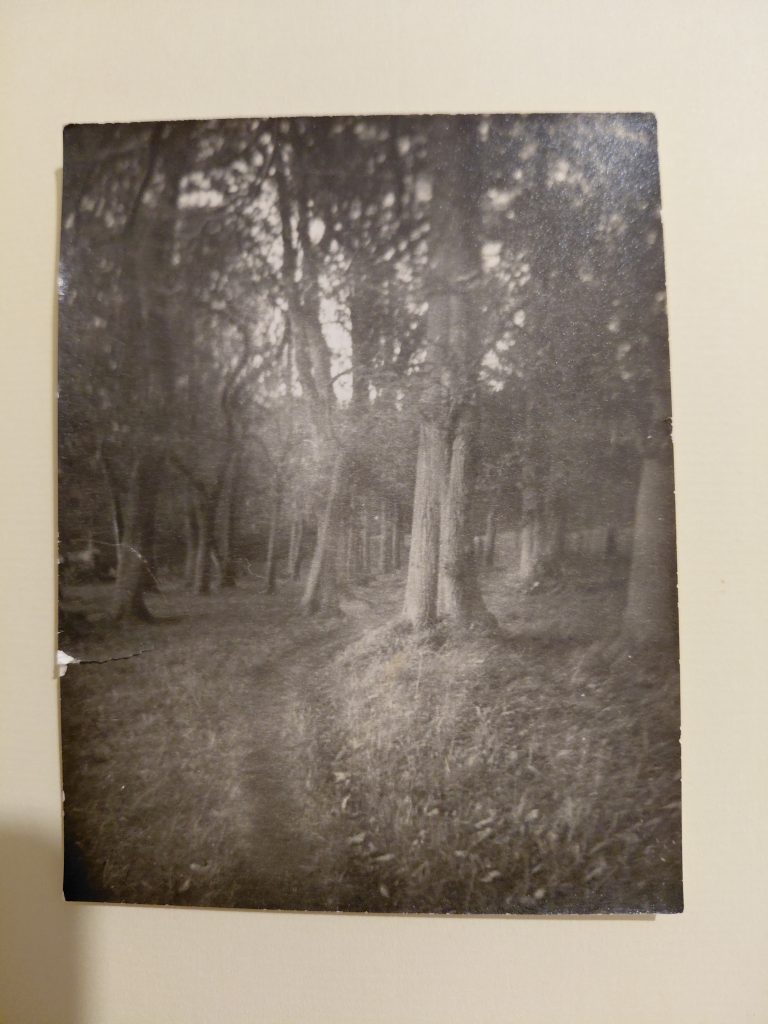
Zine and leaflets from the anarchist bookshop in Whitechapel, an old camera from a stall in Brick Lane A mysterious postcard of Lake and a shaky photo of woodland purchased for a £1 on Brick Lane, they are a reminder to include mysteries, folk tales, haunting and rituals in my understandings.
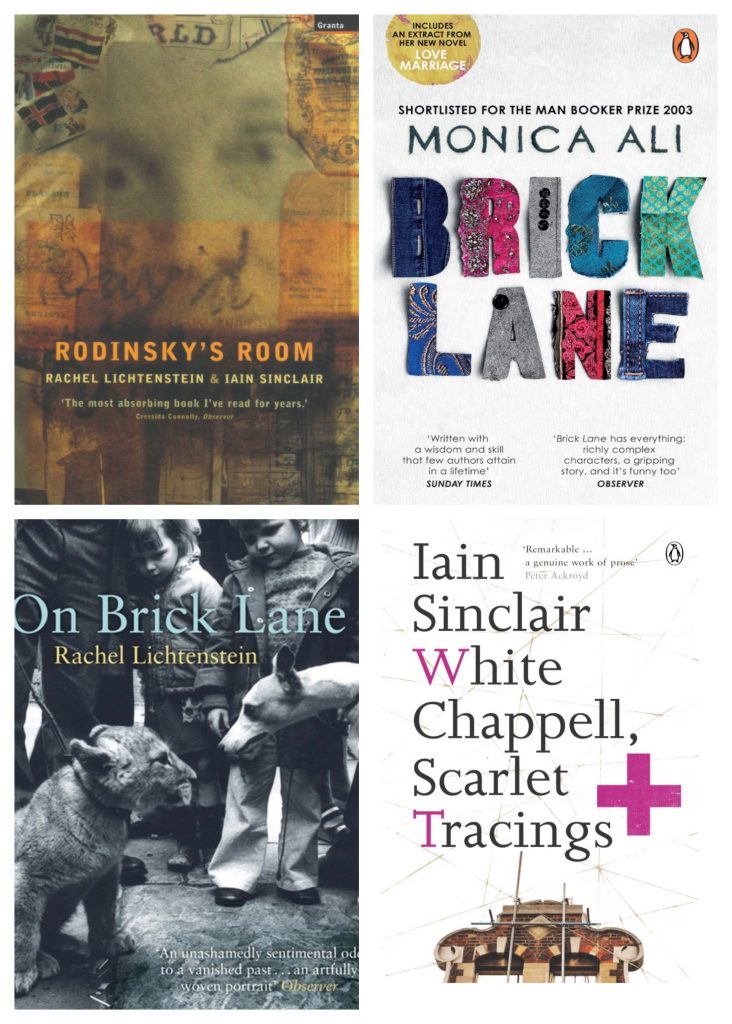
I am reminded of another book by Rachel Lichtenstein and Iain Sinclair : Rodinsky’s Room, about a Jewish mystic who disappeared from his locked room in nearby Princelet Street, leaving many religious texts and untranslated writings.
This is a poignant book which speaks to a cultural erasure also enacted by the shrill humming presence of data centres, both in London and Devon, the scale and lack of consent for their superimposition on communities is totalitarian. I was not surprised to see a fly poster of Elton Musk as Hitler on Brick Lane.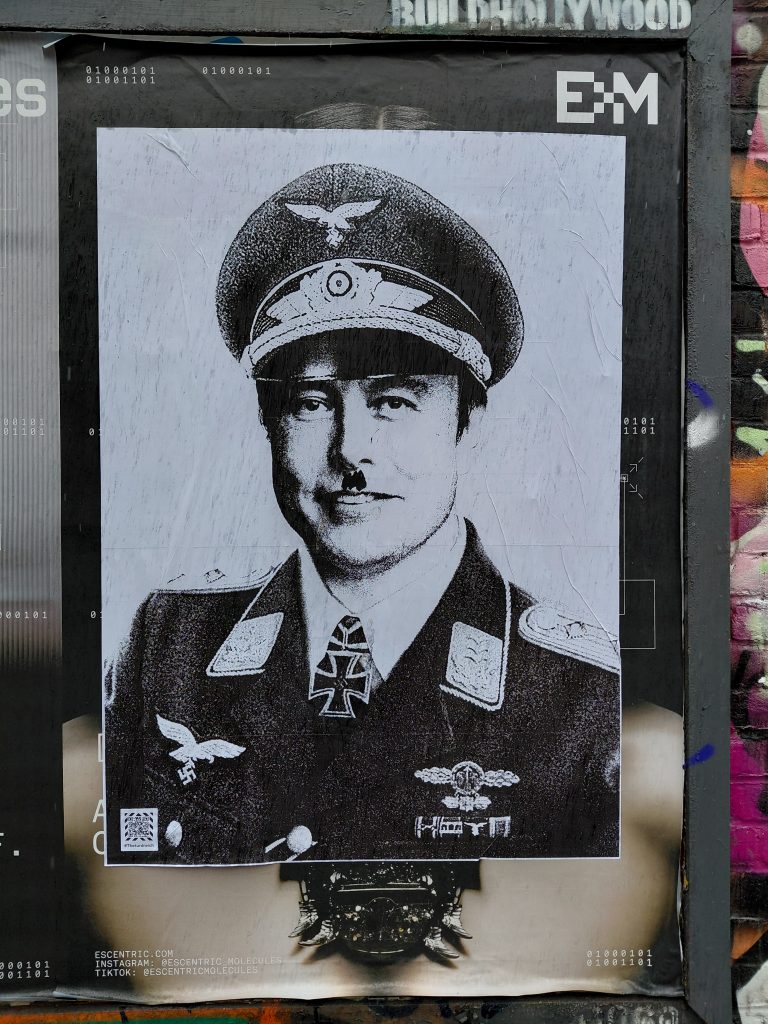
A fly poster showing Elon Musk as Adolf Hitler, Brick Lane 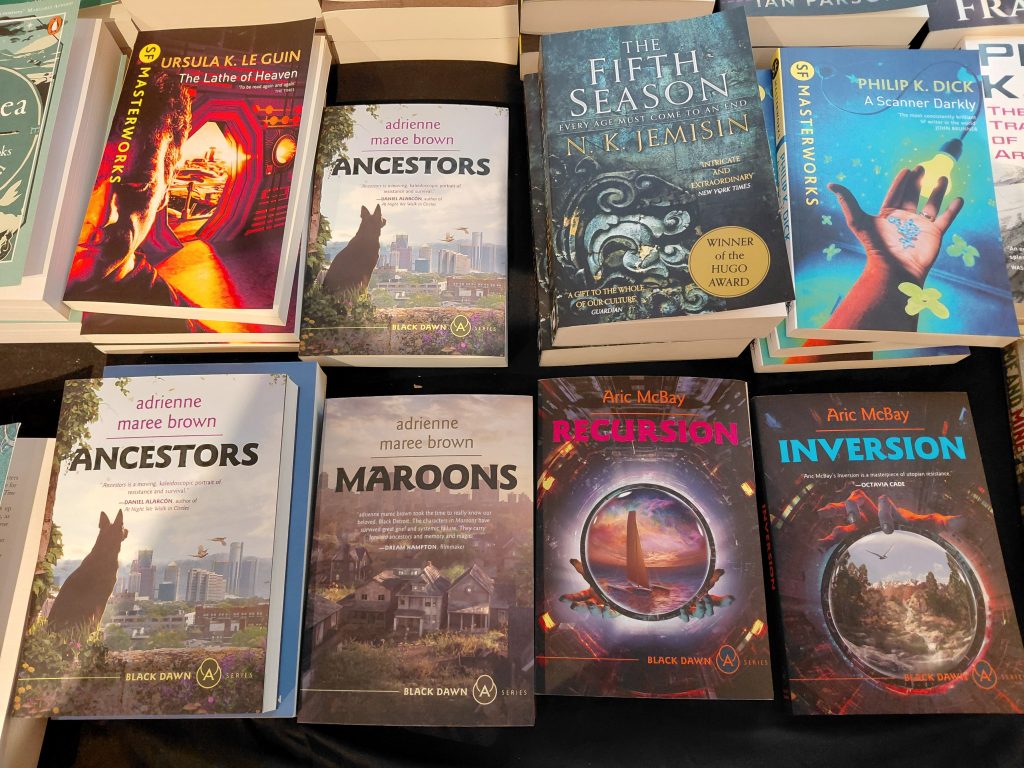
Science Fiction books in the Anarchist Bookshop, Whitechapel 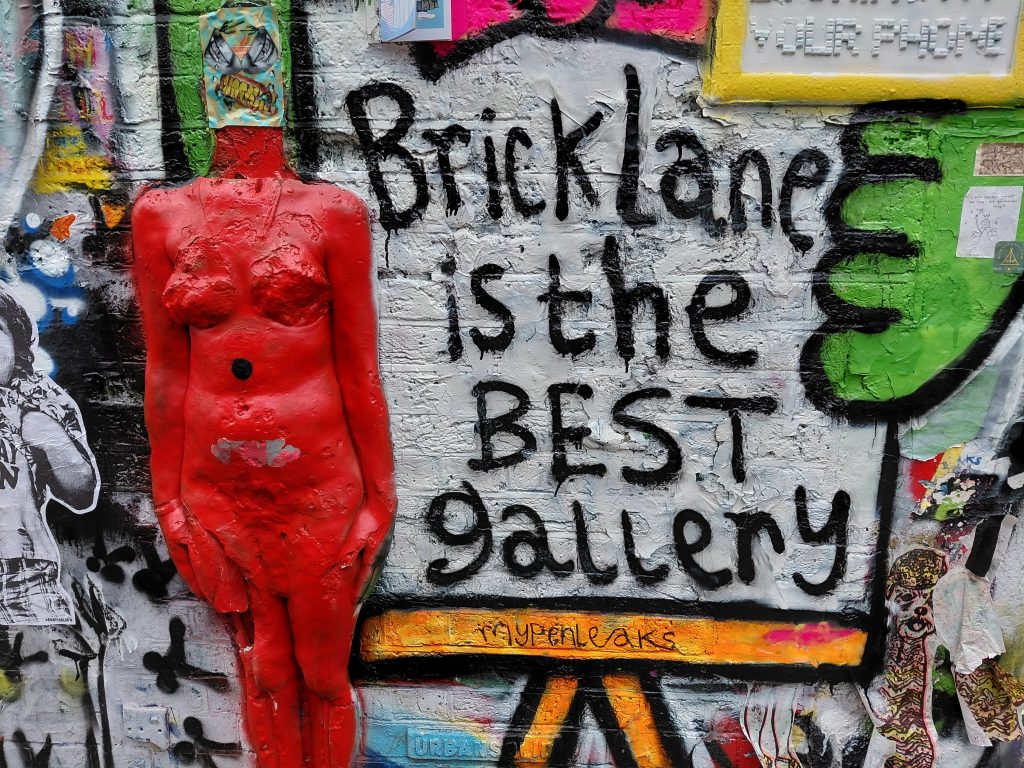
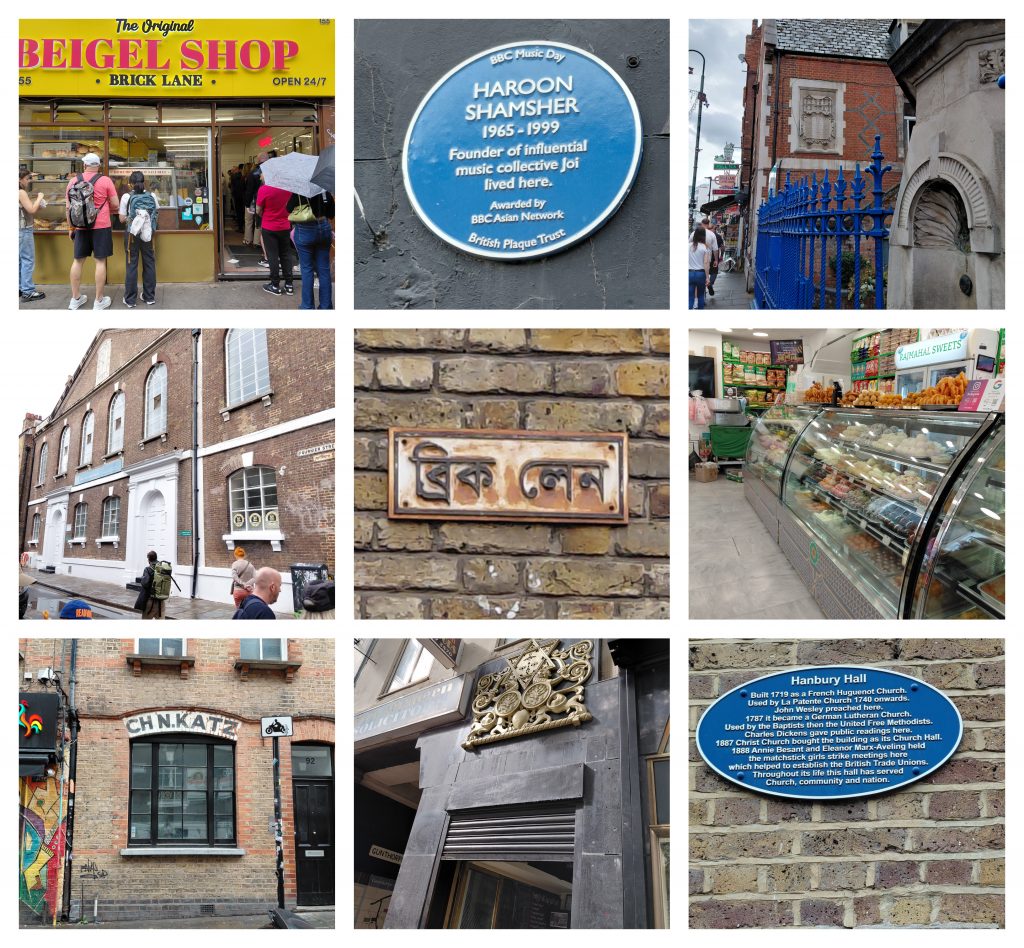
Brick Lane the best gallery, graffiti. Every surface in Brick Lane seems to be graffitied, but there is also a sense of branding behind it and I am not convinced the edginess is ‘authentic’, more of a marketing strategy, the area begins to remind me of Cambridge, a kind of theme park with very expensive coffee. Despite the gentrification there are real signs of protest and stickers which challenge power and the hegemonic oligarchy behind AI infrastructure.
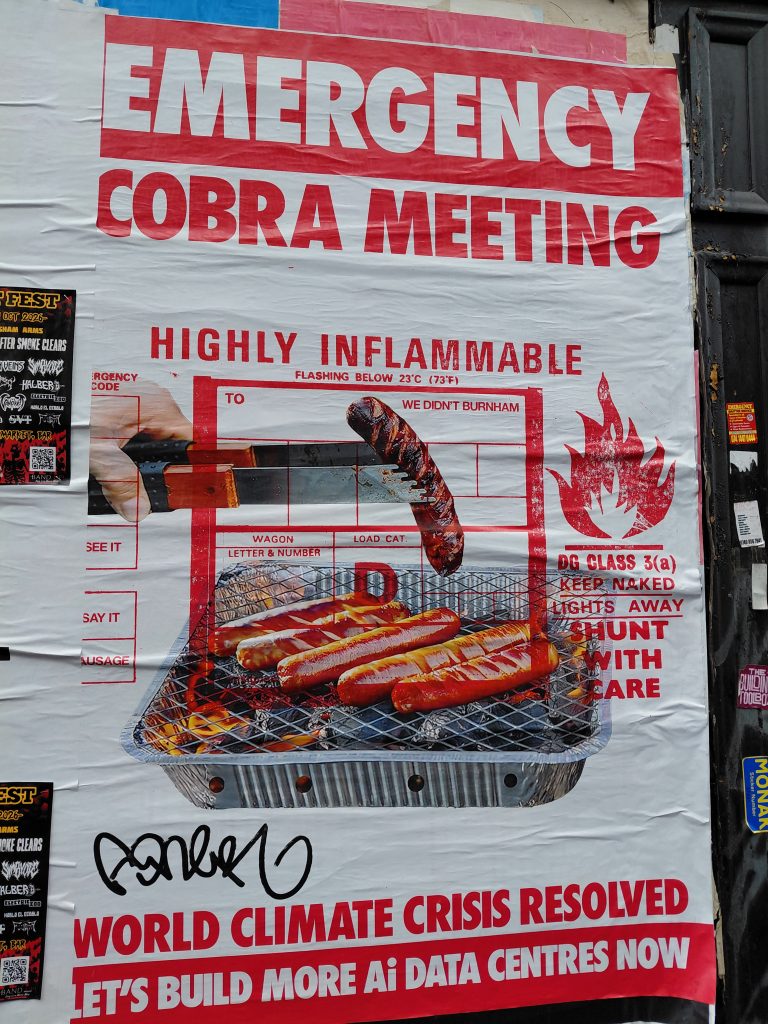
I keep thinking of the Golem of Prague and wonder if that image of monstrous material might be a useful symbol for data centres and power, another significant reference is Frankenstein, an overtly critical book in confrontation with positivist logic as I interpret it.
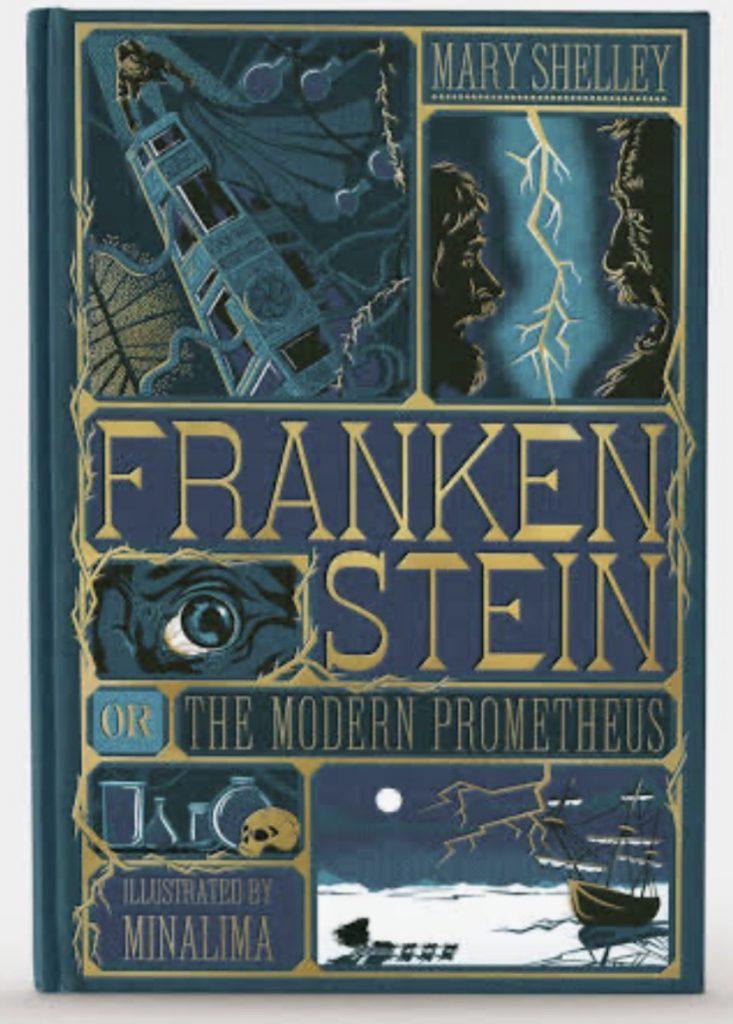
Screenshot -
High Brow/Low Brow
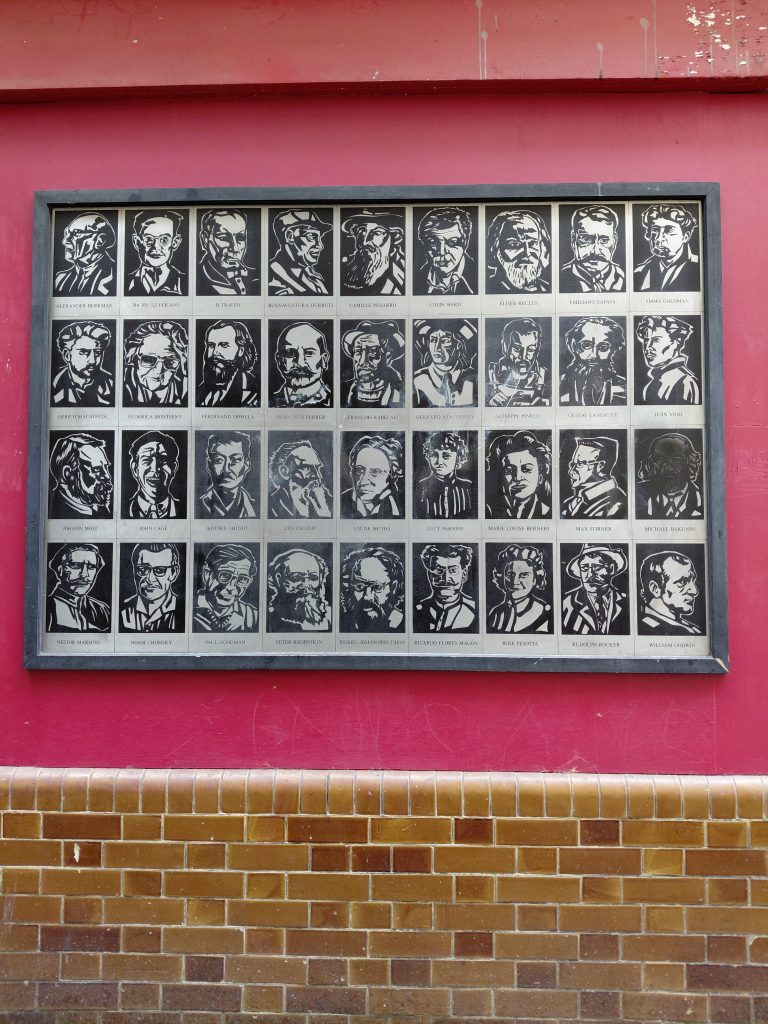
A mural of anarchists outside the Anarchist Bookshop at Whitechapel 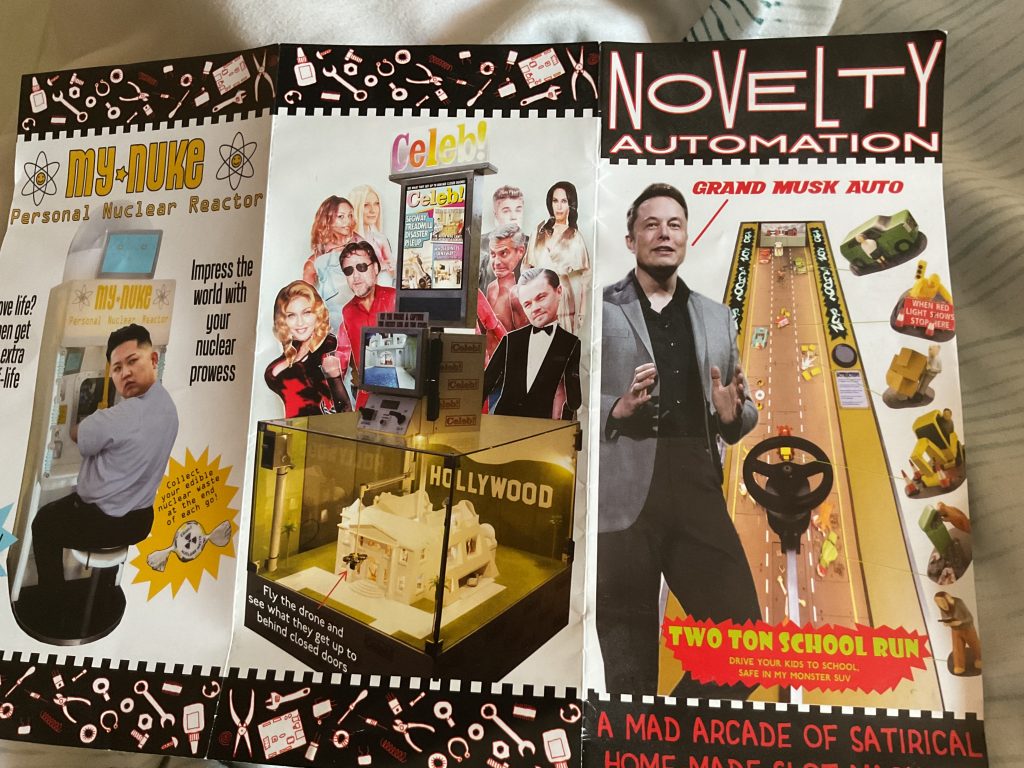
sardonic materials from the otherwise high brow museum of automation, Bloomsbury area.
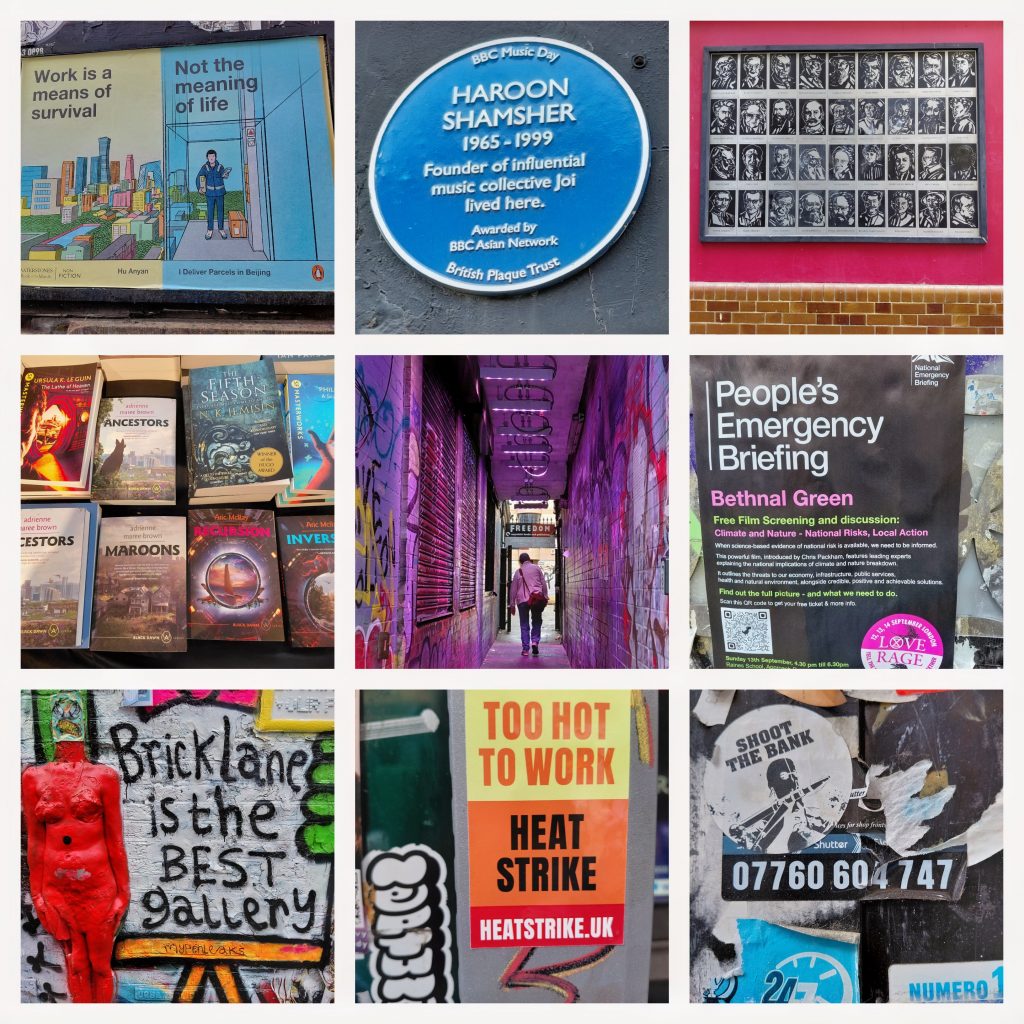
scenes from Brick Lane, guess the ‘brow’
-
Resources

On Brick Lane by Rachel Lichtenstein This is a very useful book, providing a social history of Brick Lane, which has many phases of immigration by Huguenots, Jewish and Bangladeshi communities, among other people; it also has been the scene of political confrontations, most famously between fascist Black Shirts and anti-fascists in Cable Street. I remember my grandfather saying he wanted to join the anti-fascists but was too frightened when he saw the Mosley supporters carrying sticks. Now Brick Lane is the locus of protest against a proposed Data Centre.
More here about the Battle of Cable Street: https://www.londonmuseum.org.uk/collections/london-stories/battle-of-cable-street/
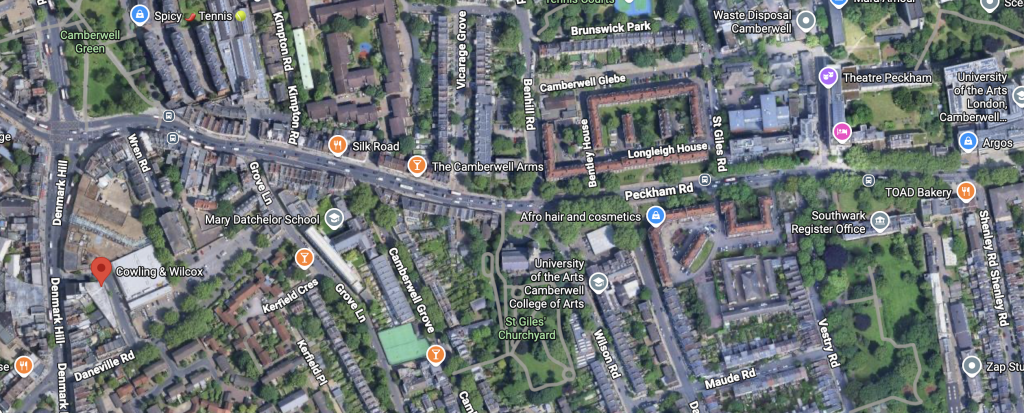
Satellite map of Cambewell I live very close to Camberwell which has a great art suppliers called Cowling and Wilcox as well as the UAL art shop and the South London Gallery next door which has a very good little book shop.
The London Picture Archive is useful (online) https://www.londonpicturearchive.org.uk/view-item?i=20615&WINID=1789050941292
The Museum of London, Docklands will be useful to visit: https://www.londonmuseum.org.uk/docklands/
I would like to do some Etching for this project so may go here: